

I treat orientation, comfort and the ability to pause as core interaction requirements. The interface should support the place, object or story without demanding attention continuously.
Map the setting and inputs
I define the device, purpose and physical conditions of use. I consider movement, competing demands on attention and the available touch, gaze, gesture or voice inputs. Real-world reference points inform the placement of content and controls.
Establish spatial hierarchy
I decide what stays anchored, what follows attention and what appears only when needed. Scale, legibility and feedback must help the person understand both the content and their position within the experience.
Design transitions and interruptions
I work through entry, movement, return and exit paths. I include contextual controls, pauses, lost tracking and unavailable content, and specify how the experience responds when normal interaction is interrupted.
Evaluate on the target device
I use screen-based prototypes to review hierarchy and flow. Spatial scale, comfort and tracking require evaluation on the intended device and in the relevant setting. I keep those findings separate from what a screen prototype can establish.
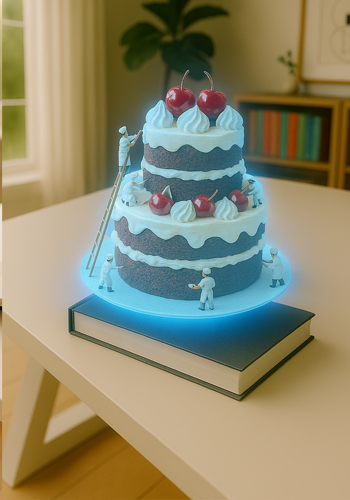
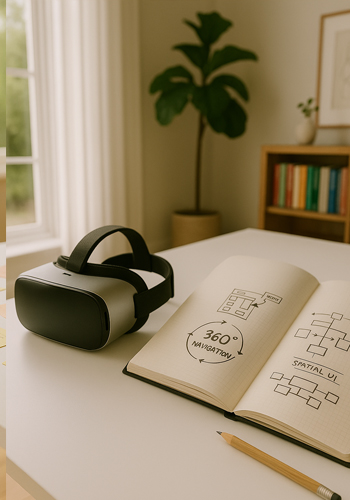
I ask whether a person can explore while knowing where they are, what is available and how to pause or leave.
About
Me
I bring together product thinking, visual identity and interaction design, with close attention to context, clarity and the details that make an experience feel considered.
Read more